July 4, 2026
AI UGC Ads: How to Make Them — and Get Brands to Pay You
AI UGC ads are the fastest-growing service in performance marketing. Learn how they're made, what brands pay, and how to land your first paying client.
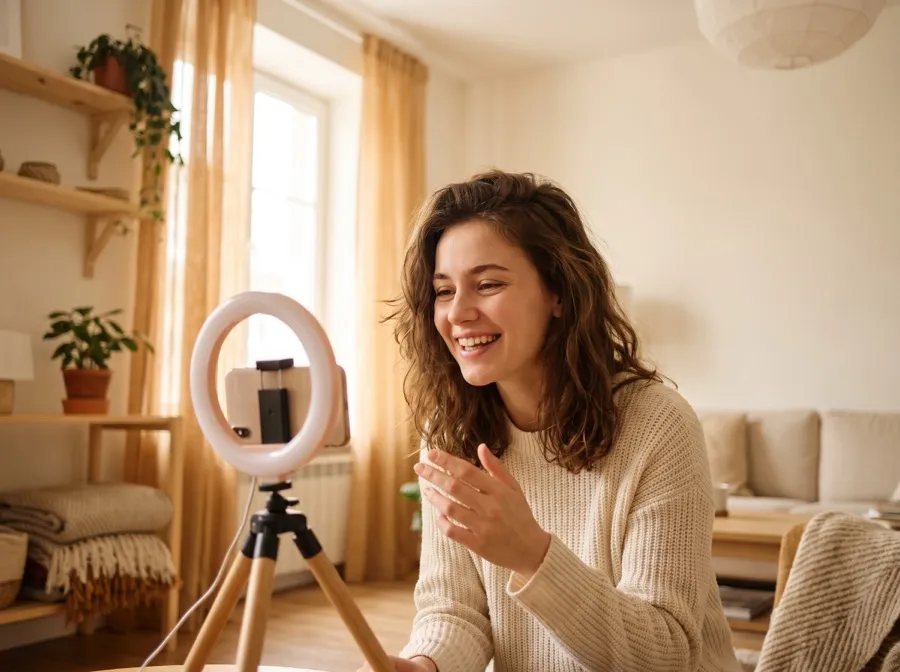
UGC — user-generated content — has been the highest-converting ad format on Meta and TikTok for years: authentic-looking videos of “real people” talking about a product. Brands can’t get enough of it. The problem? Human UGC creators are slow, inconsistent and expensive at scale.
Enter AI UGC: the same authentic style, generated on demand. It’s currently one of the fastest, most direct ways to earn money with AI video — because you’re selling into an existing budget line that every ecommerce brand already has.
Why brands are switching to AI UGC
A human UGC campaign means recruiting creators, shipping products, waiting two weeks, and hoping the delivery is usable. An AI UGC workflow produces ten ad variations in an afternoon — different hooks, different “creators”, different angles — ready for A/B testing the same day.
For performance marketers who live and die by creative testing velocity, that’s not a nice-to-have. It’s the whole game. Testing 20 creatives beats testing 2, every time.
How AI UGC ads are made
1. Create a consistent AI “creator”
The foundation is a believable, consistent character. Generate your persona with an image model, lock in their look with a reference set (same face across shots and outfits), and build a small library of start frames: holding the product, at a desk, in a car, selfie-style.
Character consistency is the technical skill here — inconsistent faces are what make cheap AI ads look cheap.
2. Write hooks like a direct-response marketer
UGC ads live or die in the first two seconds. The visual formula is simple (person, camera, product); the words carry the weight:
- “I was today years old when I found out…”
- “Stop buying [X] until you watch this.”
- “My dermatologist is going to hate me for sharing this.”
Write 10 hooks per product. Test them all — that’s precisely the advantage AI gives you.
3. Animate with a talking-head video model
Feed your start frame plus the script into a video model with strong lip-sync. The current generation of tools handles natural speech, micro-expressions and hand gestures well enough that the best AI UGC is genuinely hard to spot.
4. Cut it like a real ad
Add captions (most social video is watched muted), product b-roll inserts, and a clear call to action. Keep it 15–35 seconds. Export in 9:16 and you’re done.
What does AI UGC work pay?
Current market rates for freelancers: $100–500 per finished ad, with bundles (one product, 5–10 hook variations) selling for $500–2,000. Agencies charge brands monthly retainers of $2k–10k for ongoing creative testing volume. One skill, several business models: freelance per-video, productized bundles, or a small agency.
How to get your first paying client
- Pick one niche you understand — beauty, fitness, gadgets, pet products.
- Make 3 spec ads for real products from real brands (clearly labeled as concepts). This is your portfolio.
- Pitch 10 stores with one free sample ad made for their product. A personalized free sample converts dramatically better than a generic portfolio link.
- Deliver fast, ask for the retainer. Speed is your differentiator over human UGC — make sure the client feels it.
Where to learn the craft
Two communities specialize in exactly this skill set. AI Video Bootcamp is the biggest all-around community, with strong UGC and AI-avatar training, weekly cash-prize contests and an Opportunities board where paid gigs get posted. Thomas’ AI Product Ads community goes deeper on the product-commercial side, with a library of 150+ proven prompts and weekly live Q&As — and the founder posts paid gig offers from time to time.
Not sure whether ads are your path at all? The free career quiz compares five ways to earn with AI video and recommends one based on your goals — or grab the full AI Video Career Roadmap PDF.
FAQ
Is AI UGC legal? Do I have to disclose it’s AI? Rules vary by platform and country, and they’re tightening. Meta requires AI disclosure for some ad categories. The practical answer: follow the platform’s current ad policies, never fake real-person testimonials for health claims, and keep your client informed.
Will brands really pay if they could generate it themselves? Brands pay for outcomes, not generation. Hooks that convert, characters that look real, testing velocity — that’s craft. Same reason they pay designers despite Canva existing.
What’s the hardest part to learn? Character consistency and natural speech rhythm. Both are solved problems — but only inside workflows that took practitioners months to refine, which is exactly what the communities above teach.